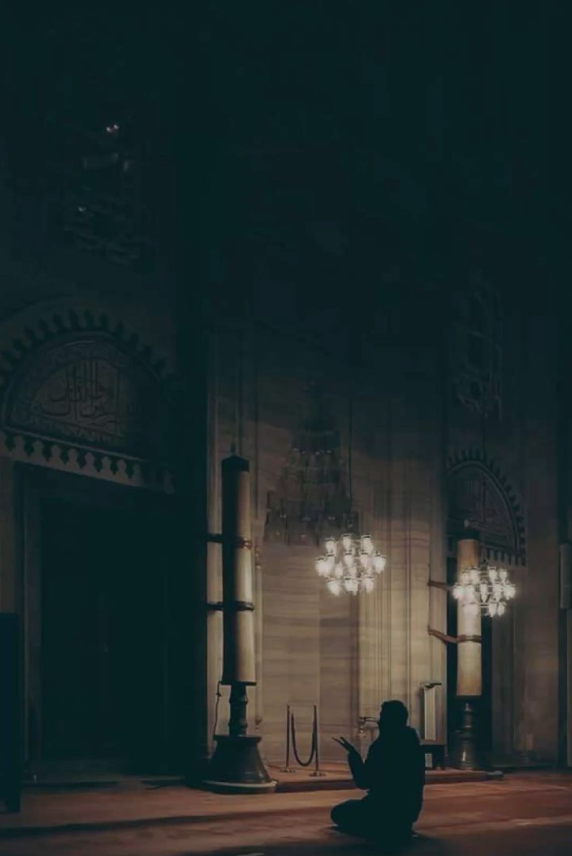
Laylatul Qadr: The Virtue of the Blessed Night in the Last Ten Days and the Recommended Acts of Worship
In the month of Ramadan, there is a special night that holds immense significance in terms of honor and virtue. This night is known as Laylatul Qadr (the Night of Decree). On this night, Allah sent down the Holy Qur’an as guidance for humanity. Therefore, this night is filled with mercy, forgiveness, and countless blessings. By the command of Allah, the angels descend to the earth, and throughout the night peace and goodness prevail.
Allah the Almighty says:
“Indeed, We sent it [the Qur’an] down during the Night of Decree. And what can make you know what the Night of Decree is? The Night of Decree is better than a thousand months.” — Surah Al-Qadr, Verses 1–3
In the Qur’an, this night is also described as a blessed night. Allah states that He revealed the Qur’an on a blessed night, during which every matter of wisdom is decreed.
— Surah Ad-Dukhan, 44:3
Laylatul Qadr certainly occurs in the last ten nights of Ramadan. This is based on the statement of the Prophet Muhammad (peace and blessings be upon him):
“Seek Laylatul Qadr in the last ten nights of Ramadan.” — Sahih Bukhari, Hadith: 2020
Furthermore, the hadiths mention that it is more likely to occur on the odd-numbered nights among the last ten nights of Ramadan. For this reason, the Prophet Muhammad (peace and blessings be upon him) devoted himself more intensely to worship in order to attain this night.
Abu Sa‘id Al-Khudri (may Allah be pleased with him) narrated that the Prophet (peace and blessings be upon him) initially performed i‘tikaf during the first ten days of Ramadan, then during the middle ten days. Afterwards he informed the companions that he had been informed about Laylatul Qadr but was later made to forget its exact timing; however, it is in one of the odd nights of the last ten days.
— Sahih Bukhari, Hadith: 776
In order to seek Laylatul Qadr, the Prophet (peace and blessings be upon him) would increase his acts of worship during the last ten nights of Ramadan. Ummul Mu’minin Aisha (may Allah be pleased with her) reported that the Prophet (peace and blessings be upon him) would worship more during the last ten nights of Ramadan than at any other time.
— Sahih Muslim, Hadith: 1175
It is also narrated that when the last ten nights of Ramadan began, he would stay awake at night, awaken his family members, and devote himself completely to worship. This demonstrates the special importance he placed on these nights and his earnest effort to attain closeness to Allah.
— Sahih Muslim, Hadith: 1174; Sahih Bukhari, Hadith: 2024
Even for attaining the minimum virtue of Laylatul Qadr, certain acts of worship have been emphasized in the hadith. Among them, performing prayers in congregation is especially important.
The Prophet (peace and blessings be upon him) said:
“Whoever performs the Isha prayer in congregation, it is as if he has prayed half the night; and whoever performs the Fajr prayer in congregation, it is as if he has prayed the entire night.”
— Sahih Muslim, Hadith: 656
The Prophet (peace and blessings be upon him) also instructed believers to make special supplication on Laylatul Qadr. Aisha (may Allah be pleased with her) once asked what supplication she should recite if she were to find Laylatul Qadr. The Prophet taught her the following supplication:
Allahumma innaka ‘afuwwun tuhibbul ‘afwa fa‘fu ‘anni.
Meaning: “O Allah, You are Most Forgiving and You love to forgive, so forgive me.”
— Jami‘ At-Tirmidhi, Hadith: 3513
From these teachings, it becomes clear that Laylatul Qadr is a magnificent and blessed night. In search of this night, believers should increase their worship during the last ten nights of Ramadan, stay awake in prayer, perform prayers in congregation, engage in i‘tikaf, and sincerely seek forgiveness from Allah. Through these efforts, a Muslim may hope to attain the blessings and virtues of this extraordinary night.
Perhaps this night could be the most valuable night of our lives—one that may become the means for the forgiveness of our sins and an opportunity to draw closer to Allah. Therefore, we should try to spend every night of the last ten days of Ramadan as if it were Laylatul Qadr, dedicating ourselves to sincere worship.