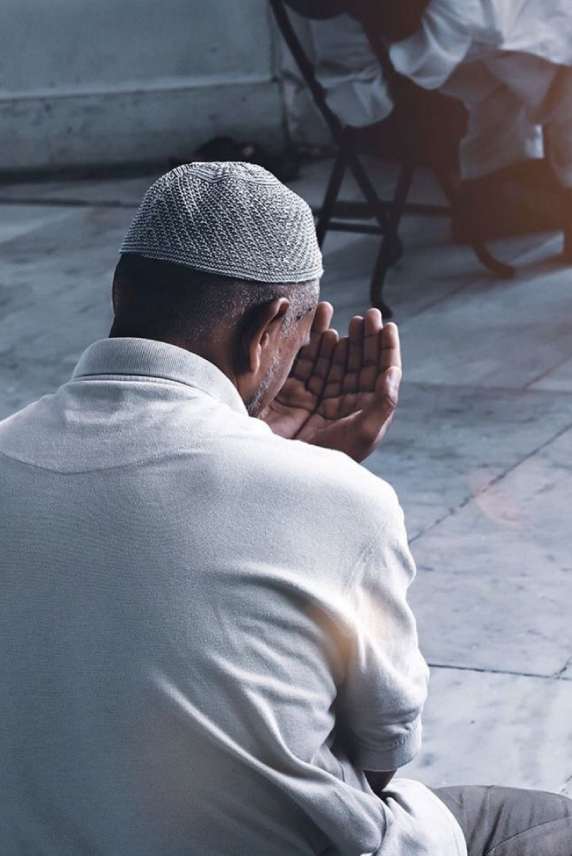
Deeds That Lead to the Forgiveness of Sins: In the Light of the Qur’an and Hadith
Human beings are naturally prone to mistakes and sins. However, Allah the Almighty has always kept the door of repentance open for His servants and has invited them repeatedly to return to Him.
In the Qur’an, the believers are addressed:
“O you who believe! Turn to Allah with sincere repentance. It may be that your Lord will remove from you your sins and admit you into gardens beneath which rivers flow.” (Surah At-Tahrim, Verse: 8)
It is also stated that people should never despair of Allah’s mercy, for Allah is capable of forgiving all sins. “Indeed, Allah forgives all sins.” (Surah Az-Zumar, Verse: 53)
Allah has prescribed many simple deeds for His servants through which their sins are forgiven. These deeds are mentioned in the Qur’an and authentic Hadith. Some of them are presented below.
Performing ablution (wudu) properly is one of the deeds through which sins are removed. The Messenger of Allah (sallallahu alaihi wasallam) said that when a person performs wudu properly, his sins fall away from his body—even from beneath his fingernails. (Sahih Muslim — Hadith: 466)
Praying two rak‘ahs of prayer with concentration after performing wudu is also a means of forgiveness. The Messenger of Allah (sallallahu alaihi wasallam) said that whoever performs ablution as he did and then prays two rak‘ahs with full attention will have his previous sins forgiven. (Sahih Muslim — Hadith: 426)
Certain acts within prayer are also causes of forgiveness. When the imam says Sami‘Allahu liman hamidah and the followers respond with Rabbana wa lakal hamd, and it coincides with the statement of the angels, the person’s previous sins are forgiven. (Jami‘ At-Tirmidhi — Hadith: 267)
Similarly, when a person says “Ameen” after the imam finishes reciting Surah Al-Fatihah and it coincides with the angels’ saying of Ameen, his sins are forgiven. (Sahih Bukhari — Hadith: 728)
Some supplications in daily life are also means of forgiveness. Reciting the prescribed supplication after eating leads to the forgiveness of previous sins. (Jami‘ At-Tirmidhi — Hadith: 3458)
Likewise, reciting the supplication of praise to Allah when wearing new clothes also results in the forgiveness of previous sins. (Sunan Abu Dawud — Hadith: 4023)
Among the acts of worship, fasting during Ramadan is a special means of forgiveness. The Messenger of Allah (sallallahu alaihi wasallam) said that whoever fasts during Ramadan with faith and seeking reward will have his previous sins forgiven. (Sahih Bukhari — Hadith: 2014; Sahih Muslim — Hadith: 759)
Similarly, performing the night prayers of Ramadan (Tarawih) brings the same virtue. (Sahih Bukhari — Hadith: 2009; Sahih Muslim — Hadith: 1664)
Likewise, whoever stands in prayer during the Night of Decree (Laylatul Qadr) with faith and seeking reward will have his previous sins forgiven. (Sahih Bukhari — Hadith: 2014; Sahih Muslim — Hadith: 759)
Performing Hajj correctly is also one of the greatest means of forgiveness. The Messenger of Allah (sallallahu alaihi wasallam) said that whoever performs Hajj and avoids obscenity and sin returns as free from sin as the day his mother gave birth to him. (Sahih Bukhari — Hadith: 1819; Sahih Muslim — Hadith: 3182)
Reciting the prescribed supplication after hearing the call to prayer (adhan) is also a cause for forgiveness. (Sahih Muslim — Hadith: 737)
Seeking forgiveness (Istighfar), especially by reciting “Astaghfirullāhal ‘Aẓīm…”, leads to Allah’s forgiveness—even if the sins are major. (Jami‘ At-Tirmidhi — Hadith: 3577)
Reciting Tasbih, Tahmid, and Takbir after the obligatory prayers—such as saying SubhanAllah 33 times, Alhamdulillah 33 times, and Allahu Akbar 33 times, followed by the prescribed supplication—leads to the forgiveness of sins even if they are as abundant as the foam of the sea. (Sahih Muslim — Hadith: 1239)
Daily remembrance of Allah (dhikr) is also a means of forgiveness. Whoever says “Subhanallahi wa bihamdihi” one hundred times in a day will have his sins forgiven even if they are like the foam of the sea. (Sahih Bukhari — Hadith: 6405)
Similarly, reciting “La ilaha illallah, wallahu akbar, wa la hawla wa la quwwata illa billah” also leads to the forgiveness of sins. (Jami‘ At-Tirmidhi — Hadith: 3460)
Greeting one another with Salam and shaking hands when meeting is also a means of forgiveness. When two Muslims meet and shake hands, their sins are forgiven before they part from each other. (Sunan Abu Dawud — Hadith: 5212)
Certain chapters of the Qur’an also have special virtues. For example, Surah Al-Mulk will intercede for a person until he is forgiven. (Jami‘ At-Tirmidhi — Hadith: 2891)
Likewise, when people gather in a gathering to remember Allah, Allah forgives them and may even replace their sins with good deeds. (Musnad Ahmad — Hadith: 12476; Sahih Bukhari — Hadith: 6408)
Thus, according to the Qur’an and Hadith, Allah the Almighty has prescribed many simple and beneficial deeds through which His servants can attain forgiveness of their sins. These deeds guide people toward the remembrance of Allah, repentance, and worship, bringing them closer to Him.
May Allah grant us all the ability to avoid sins and perform righteous deeds. Ameen.