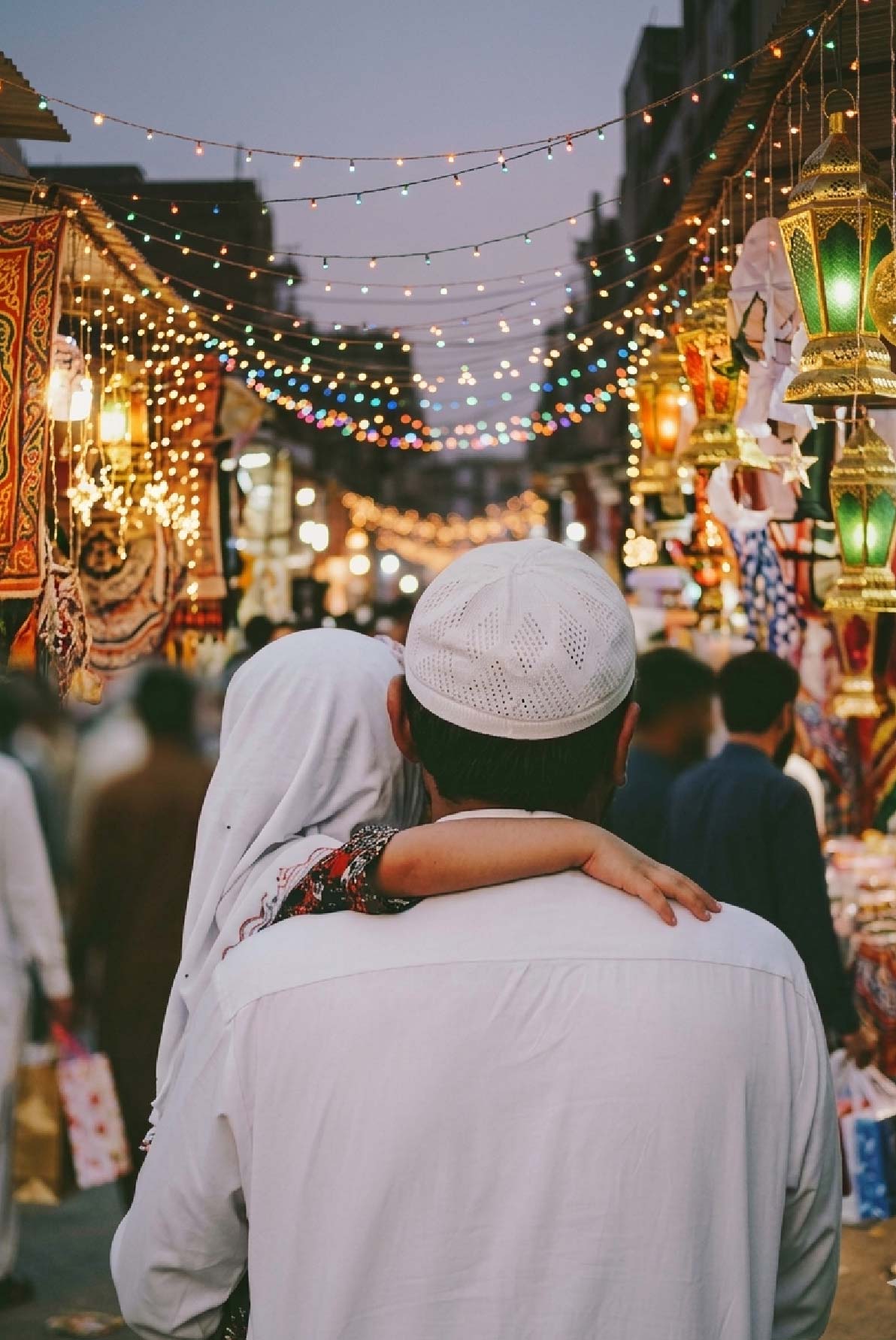
10 Important Acts to Do on the Day of Eid al-Fitr — In the Light of Authentic Hadith
After a month of fasting during Ramadan, Allah has designated a joyful day for Muslims known as Eid al-Fitr. It is not merely a day of celebration; rather, it is a time to express gratitude to Allah, continue acts of worship, and share happiness with others in society. From the life of the Messenger of Allah, Muhammad sallallahu alaihi wasallam, we learn several Sunnah practices related to the day of Eid. Following these practices enriches the day of Eid with the spirit of worship.
Allah says in the Qur’an:
“And so that you complete the prescribed number of days and proclaim the greatness of Allah for having guided you, and that you may be grateful.” (Surah Al-Baqarah — 2:185)
1. Reciting Takbir
It is recommended to recite Takbir from the sighting of the Eid moon until the Eid prayer. From the last iftar of Ramadan, the month of Shawwal begins, and from that moment it is encouraged to recite Takbir frequently. While going to the Eid prayer ground, men should recite Takbir aloud and continue until the Imam arrives.
The words of Takbir are:
Pronunciation: Allahu Akbar Allahu Akbar, La ilaha illallahu, wallahu Akbar Allahu Akbar, wa lillahil hamd.
Meaning: Allah is the Greatest, Allah is the Greatest. There is no true deity except Allah. Allah is the Greatest, Allah is the Greatest. All praise belongs to Allah.
2. Paying Sadaqat al-Fitr
One of the important acts of Eid is giving Sadaqat al-Fitr. Through this charity, the poor and needy can also participate in the joy of Eid. From the practice of the Companions, it is known that paying Fitr two or three days before Eid is preferable so that it can be utilized properly. The final time for paying it is before the Eid prayer.
Ibn Umar (may Allah be pleased with him) narrated:
“The Messenger of Allah sallallahu alaihi wasallam made Sadaqat al-Fitr obligatory for every Muslim—free or slave, male or female.” (Sahih Bukhari — Hadith: 1503)
3. Waking Early and Preparing for Eid
It is Sunnah to wake up early on the day of Eid and prepare to go to the Eid prayer ground. Using miswak, taking a bath, maintaining cleanliness, and applying perfume are among the Sunnah practices of the day. However, women are prohibited from using perfume when going outside.
In a hadith it is mentioned:
“Any woman who wears perfume and passes by people is like one who commits adultery.” (Sunan Abu Dawud — Hadith: 4173)
4. Eating Before the Eid Prayer
On the day of Eid al-Fitr, it is Sunnah to eat some dates or something sweet in an odd number before going for the Eid prayer.
Anas (may Allah be pleased with him) narrated:
“The Messenger of Allah sallallahu alaihi wasallam would not go out on the day of Eid al-Fitr until he had eaten some dates, and he would eat them in odd numbers.” (Sahih Bukhari — Hadith: 953)
5. Walking to the Eid Prayer Ground
It is recommended to go to the Eid prayer ground on foot. However, if someone is ill or has a necessity, using transportation is permissible.
6. Taking Different Routes When Going and Returning
It is Sunnah to go to the Eid prayer ground by one route and return by another. If separate roads are not available, one may walk on one side of the road when going and the other side when returning. This also creates opportunities to greet others and give charity.
Jabir (may Allah be pleased with him) narrated:
“On the day of Eid, the Messenger of Allah sallallahu alaihi wasallam would go by one route and return by another.” (Sahih Bukhari — Hadith: 986)
7. Performing the Eid Prayer at the Eid Ground
It is Sunnah to perform the Eid prayer in an open field or Eid prayer ground. However, if proper arrangements are not available, it can also be performed in a mosque.
Umm Atiyyah (may Allah be pleased with her) said:
“The Messenger of Allah sallallahu alaihi wasallam commanded us to come out to the Eid prayer ground on the day of Eid.” (Sahih Bukhari — Hadith: 971)
8. Listening to the Khutbah Attentively
After the Eid prayer, a khutbah (sermon) is delivered. It is obligatory for the congregation to remain silent and listen attentively. Talking or engaging in unnecessary activities during the khutbah is inappropriate.
9. Expressing Joy and Happiness
Showing joy and spreading happiness on the day of Eid is part of Islamic teachings. Despite the hardships of life, maintaining a cheerful attitude and sharing happiness with others is encouraged.
A hadith states:
“Every nation has its festival, and this is our festival.” (Sahih Bukhari — Hadith: 952)
10. Exchanging Eid Greetings
It is a beautiful tradition among Muslims to exchange greetings and supplications on the day of Eid. The Companions used to greet one another by saying:
Pronunciation: Taqabbalallahu minna wa minkum.
Meaning: May Allah accept (the good deeds) from us and from you.
It is narrated:
“I met Wathilah ibn Asqa (may Allah be pleased with him) on the day of Eid and said: Taqabbalallahu minna wa minka. He replied: Yes, Taqabbalallahu minna wa minka. He said that once he met the Messenger of Allah Muhammad sallallahu alaihi wasallam on the day of Eid and said the same words, and he also replied: Yes, Taqabbalallahu minna wa minka.” (Majma‘ az-Zawa’id — Hadith: 3255)
11. Some Common Misconceptions
In society, some practices are considered Sunnah on Eid even though they are not specifically established as such. For example:
- Considering visiting graves on Eid day as a special Sunnah
- Treating hugging as a specific Eid ritual
- Thinking that wearing new clothes on Eid is a Sunnah
In reality, visiting graves can be done on any day but is not specifically prescribed for Eid. Similarly, hugging is a cultural expression of affection but not a specific Sunnah of Eid. Wearing new clothes is also not obligatory; rather, the Sunnah is to wear the best clothes one already possesses.